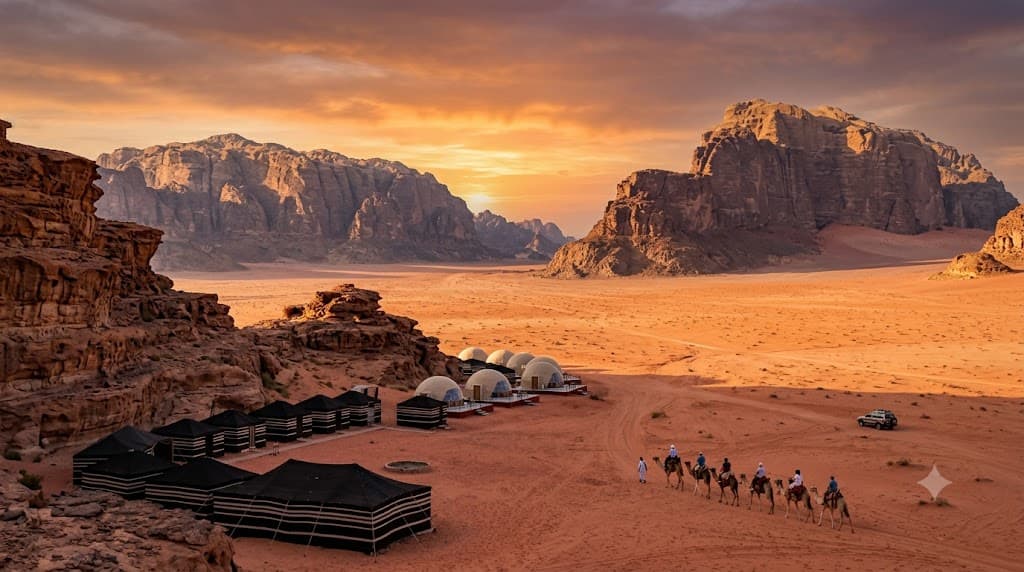
Wadi Rum, Jordan's red desert, is built for an overnight stay rather than a quick drive-through. The valley's towering sandstone mountains and wind-carved dunes have shown up as the backdrop for more than one film set on Mars, and seeing them at ground level, with the light turning them a deeper red by the hour, makes it obvious why.
Getting to Wadi Rum
Wadi Rum sits in southern Jordan, roughly 100 kilometers south of Petra and about 75 kilometers northeast of Aqaba. From Petra, the drive usually takes an hour and a half to two hours, following a mix of the winding Kings Highway and the faster Desert Highway. Aqaba, home to Jordan's main coastal airport, is closer still: just over an hour away on modern highways, which makes it a convenient entry point if you're flying in rather than coming from Petra or Amman.
Most travelers arrange a private car, a driver, or a seat on an organized tour rather than relying on public transport, since scheduled buses into the protected area are limited. However you arrive, the road ends at the Wadi Rum Visitor Center, where you check in before heading into the desert itself.
A Night in a Bedouin Camp
Most visitors book a Bedouin camp for the night, arriving in the late afternoon so there's time for a jeep tour through the rock formations before sunset. That's when the color shift on the sandstone is at its most dramatic, the rock running through shades of ochre, orange, and deep red as the sun drops. Back at camp, dinner is usually a zarb: meat and vegetables cooked underground over hot coals for hours, then dug up and served. Tea around the fire follows, the traditional close to the evening before things quiet down for the night.
Stargazing Under the Red Desert Sky
The real reason to stay overnight rather than visit for just an afternoon is the sky. With almost no light pollution for miles in any direction, Wadi Rum is one of the clearest places in the region to see the Milky Way. Most camps set up seating specifically for it after dinner, so you can lie back and watch without hauling in your own gear.
Best Time to Go
Spring (March to May) and autumn (September to November) are the most comfortable seasons to visit, with daytime temperatures mild enough for hiking and jeep tours. Summer turns brutal, often climbing past 35°C, which makes anything outside the camp's shade unpleasant by midday.
What to Pack
Bring a warm layer no matter when you go. Desert nights cool off fast once the sun is down, and in winter temperatures can drop close to freezing even after a mild, sunny day.
Share article: