A Slot Canyon Hidden in the Sinai Desert
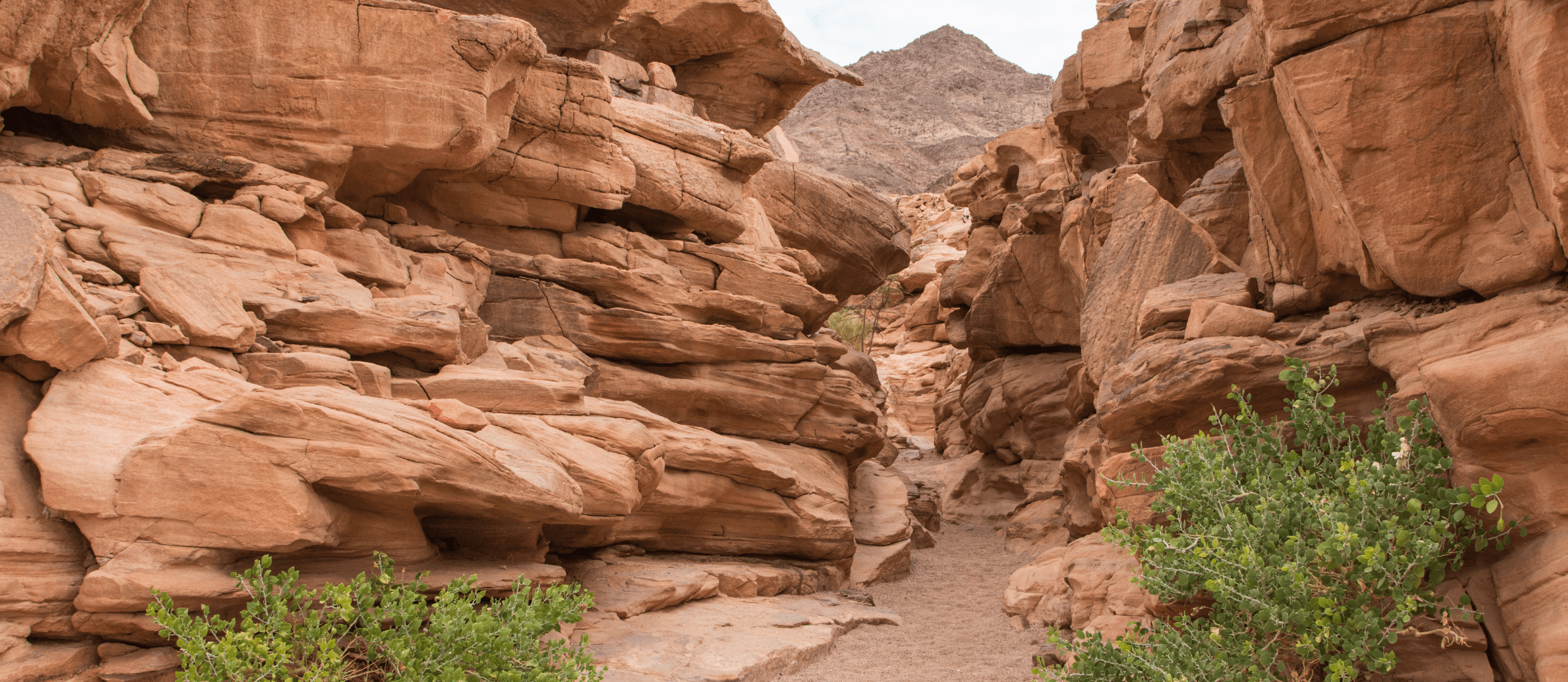
The Colored Canyon sits inland from the Gulf of Aqaba coast, in the stretch of desert between Nuweiba and Taba on Egypt's Sinai Peninsula. It's a narrow sandstone gorge, roughly 800 meters long, with walls that in places climb to around 40 meters overhead. What draws people out here isn't size so much as color: the rock shifts from brown to red to orange to gold as you move through it, layer by layer, the result of iron oxide and manganese worked into the stone over a very long stretch of geological time.
The canyon formed the way most slot canyons do, through water rather than wind. Millions of years ago this part of the Sinai lay under the Red Sea. As the water retreated, seasonal rains and flash floods kept cutting into the exposed sandstone, wearing a groove that eventually became narrow enough to earn the name it has today. Stand in one of the tightest sections and it's easy to see how a channel this size could only have been carved by moving water finding the softest path through rock.
Getting to the Canyon
There's no public transport out here, and that's part of the appeal. Most visitors reach the Colored Canyon on a 4x4 desert drive with a Bedouin guide, usually arranged as a desert safari out of Dahab, Nuweiba, or even Sharm El Sheikh further down the coast. The last stretch before the canyon mouth is done on foot, since no road actually reaches the entrance itself.
A guide isn't just a formality. The desert tracks aren't signposted, and knowing the terrain matters more out here than it does on a marked trail. Good walking shoes and a reasonable level of fitness help too, since the path inside the canyon has no railings, no steps, and no real flat ground for the narrower stretches.
Walking Through the Narrows
The hike itself typically runs two to three hours, depending on how much time you spend taking photos or just standing still where the walls close in. It isn't a strenuous trek by desert standards, more a scramble than a climb, but the ground is uneven and the space narrows enough in parts that you'll need to turn sideways to pass through.
That narrowing is really the whole point. Light filters down unevenly between the walls, and depending on the hour it can turn the sandstone almost luminous in places while leaving other stretches in deep shadow. Photographers tend to linger here longer than they expect to.
When to Visit
Like most of inland Sinai, this stretch of desert gets brutally hot in summer, so the best time to visit Egypt for a trip out to the Colored Canyon runs from around October through April, when daytime temperatures are actually bearable for a few hours of walking. Early morning departures also tend to catch the light at its best, before the midday sun flattens the color out of the rock.
Pairing It With the Rest of Your Trip
Because it sits off the main coast road, the Colored Canyon works best as a day trip built around a base somewhere else on the Sinai coast. Dahab is the closest and most common jumping-off point, but plenty of travelers staying in Sharm El Sheikh book it as a longer day excursion too, often combined with a Bedouin lunch or a stop at a nearby beach on the drive back.
It's one of those places that stays a little under the radar simply because it takes an extra step to reach, a 4x4 ride off the coast most Red Sea visitors never leave. For travelers who've already done the diving and the beach time and want to see a different side of the Sinai, it's worth the detour.
Share article: