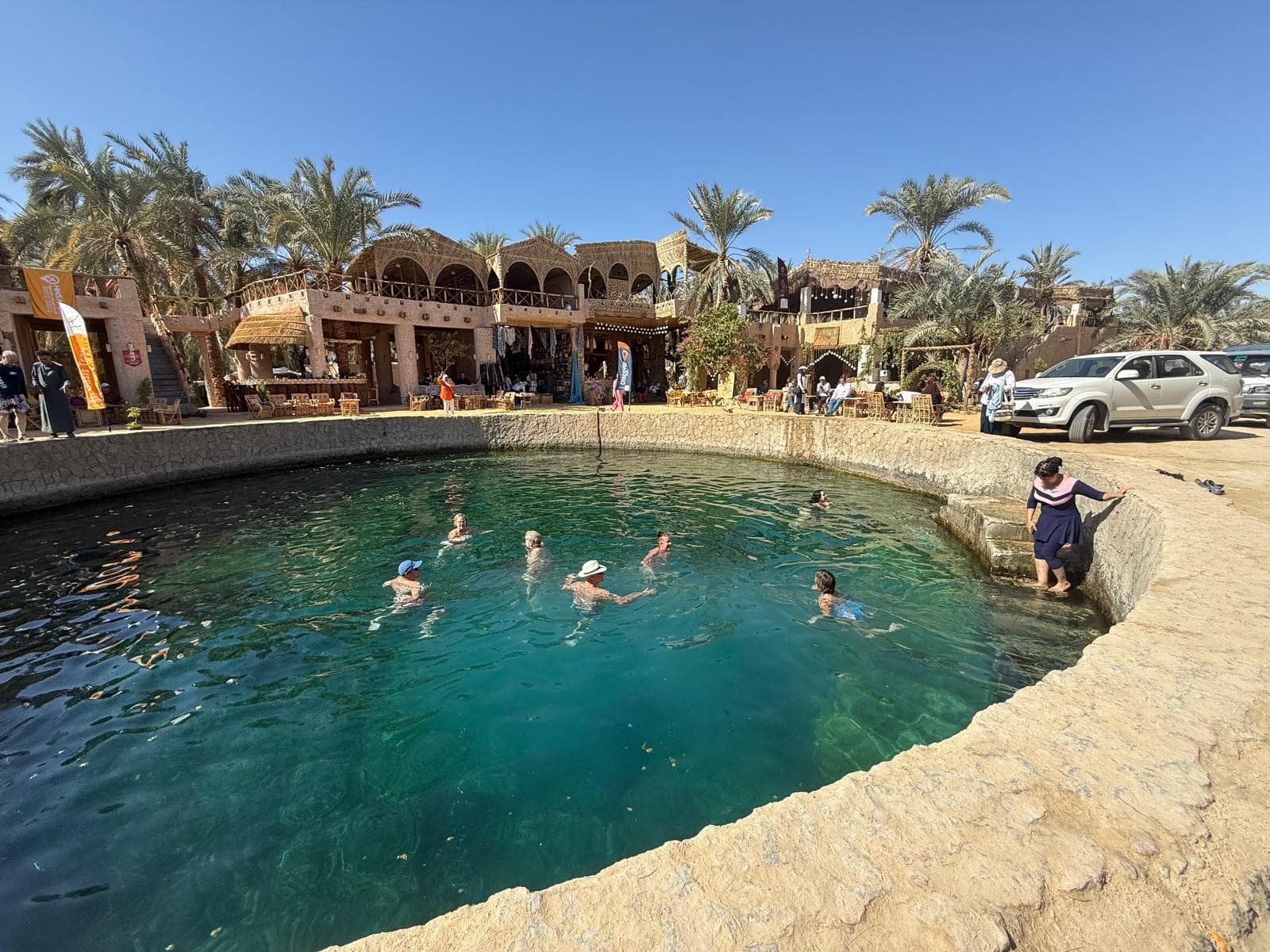
A Desert Oasis Far From Anywhere Else
Siwa is one of those places that earns its remoteness. Tucked into Egypt's Western Desert near the border with Libya, it sits roughly 750 kilometers from Cairo, and getting there is part of the experience rather than a detour from it. Palm groves and freshwater springs break up an otherwise dry, salt-crusted landscape, and two features in particular pull travelers who make the long drive out: the mineral-rich pool known as Cleopatra's Bath and a scattering of salt lakes where the water does something most water doesn't.
Floating Without Trying
The salt lakes around Siwa carry a mineral concentration far higher than seawater, similar in spirit to the Dead Sea, and the effect is the same: you barely have to try to float. Lie back and the water holds you there. Swimming laps isn't really the point, and it's worth going easy on how long you stay in, since the same salt that makes floating so effortless can leave skin and eyes feeling raw if you linger too long.
Fatnas Island, set inside one of these lakes and connected by a short causeway, has become the spot locals and visitors both gravitate to around sunset. As the light drops, the water and the crusts of salt along the shore pick up the orange and pink of the sky, and it's a genuinely calm way to end a day that probably started with several hours in a car.
Cleopatra's Bath
Not far from the lakes, a natural spring called Ain Juba, better known by its tourist name, Cleopatra's Bath, bubbles up through a stone-lined pool. The water stays mild through most of the year, cooler than the summer air and warmer than the winter chill, which is part of why locals have used it for generations. Whether Cleopatra actually stopped here is genuinely unresolved. Historians are skeptical, and similar Cleopatra's Bath claims turn up in other places around Egypt, but the name stuck in Siwa the way local legends tend to. If soaking in mineral water sounds like your kind of stop, it's worth reading our guide to Egypt's wellness breaks, which covers Siwa's springs alongside the Red Sea's spa scene.
The Oracle and Alexander the Great
Siwa's most famous historical site sits a short distance from both the bath and the lakes: the ruined Temple of Amun, once home to an oracle whose reputation reached well beyond Egypt. By around 700 BC people were traveling from across the eastern Mediterranean to consult it, and the temple's fame only grew from there, including a story about the Persian king Cambyses sending an army to destroy it that reportedly vanished in the desert before it arrived.
The visit that gets talked about most, though, is Alexander the Great's, in 331 BC. Fresh off his defeat of the Persian king Darius, he made the difficult journey from Alexandria to Siwa to consult the oracle, likely looking for the kind of divine legitimacy that Egyptian pharaohs had traditionally sought there. What exactly he was told has never been confirmed, since he kept it to himself, but the trip cemented Siwa's place in the historical record for good.
Getting There
There's no getting around it: Siwa takes effort to reach. Most travelers go by road from Cairo, following the desert highway west to Marsa Matruh on the coast before turning south into the desert, a drive that typically runs somewhere between eight and ten hours depending on the vehicle and stops along the way. It's a long day, but the route itself, coastline giving way to open desert, is part of what makes Siwa feel like such a departure from the rest of Egypt. Many visitors combine the trip with a stop at the Great Sand Sea, where most desert safaris out of Siwa head for dune driving and a night under a genuinely dark sky.
When to Go
Given how far out Siwa sits and how hot the desert gets, timing the trip matters more here than in most of Egypt. Summer temperatures regularly climb past 40°C, which makes walking around ancient ruins or lounging by a salt lake far less appealing than it sounds. The stretch from October through April is far more comfortable, with daytime temperatures generally sitting in the high teens and twenties Celsius, cool enough at night that a light jacket is worth packing even in the desert. For a broader sense of how this fits with the rest of the country, our season-by-season guide to visiting Egypt is a useful place to start planning around.
Most people who make it out to Siwa end up giving it more than a single afternoon. Between the lakes, the spring, the old town of Shali, and the oracle temple, there's enough here to fill a few unhurried days, and given the distance involved, that's exactly how it should be treated.
Share article: