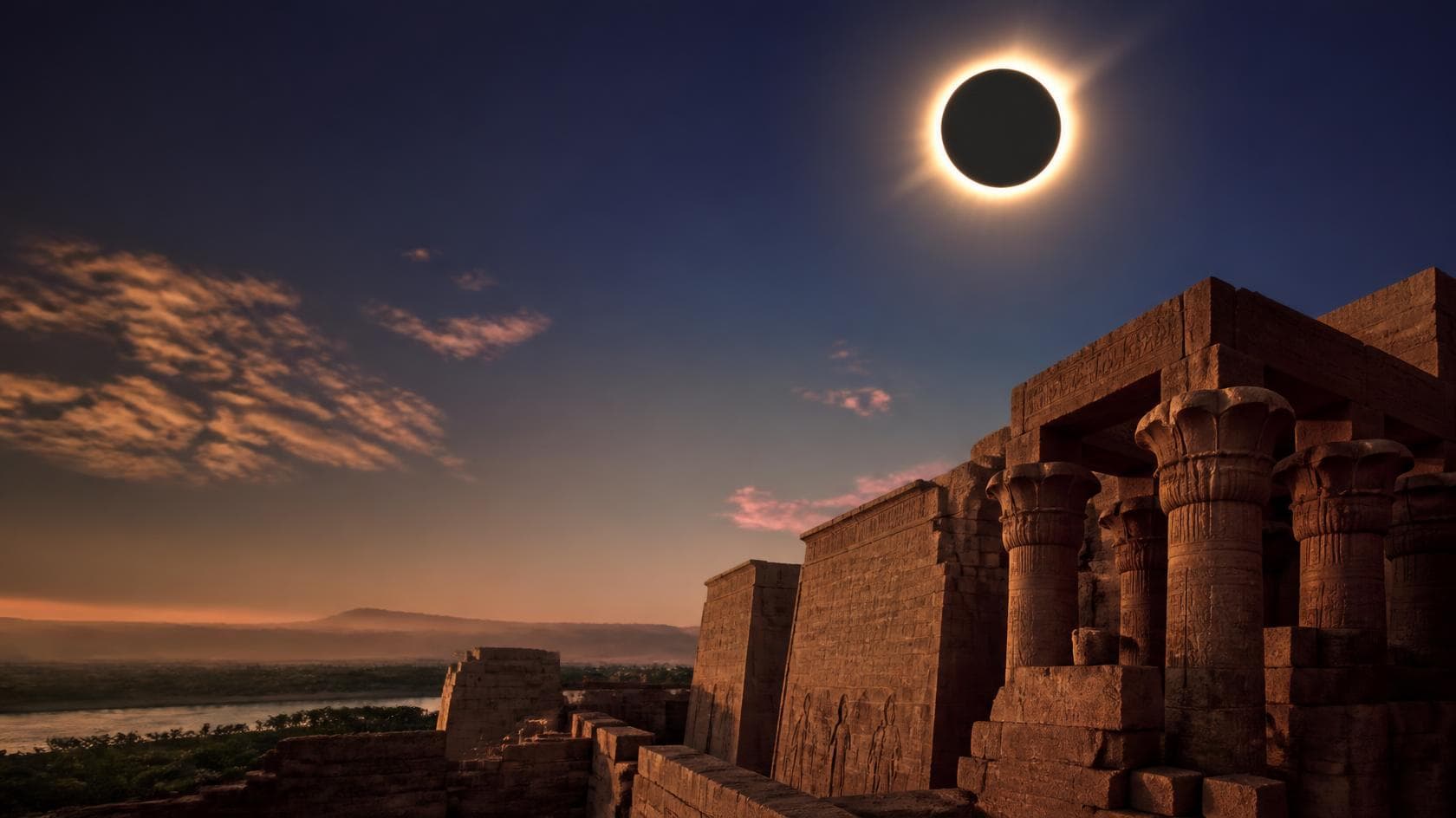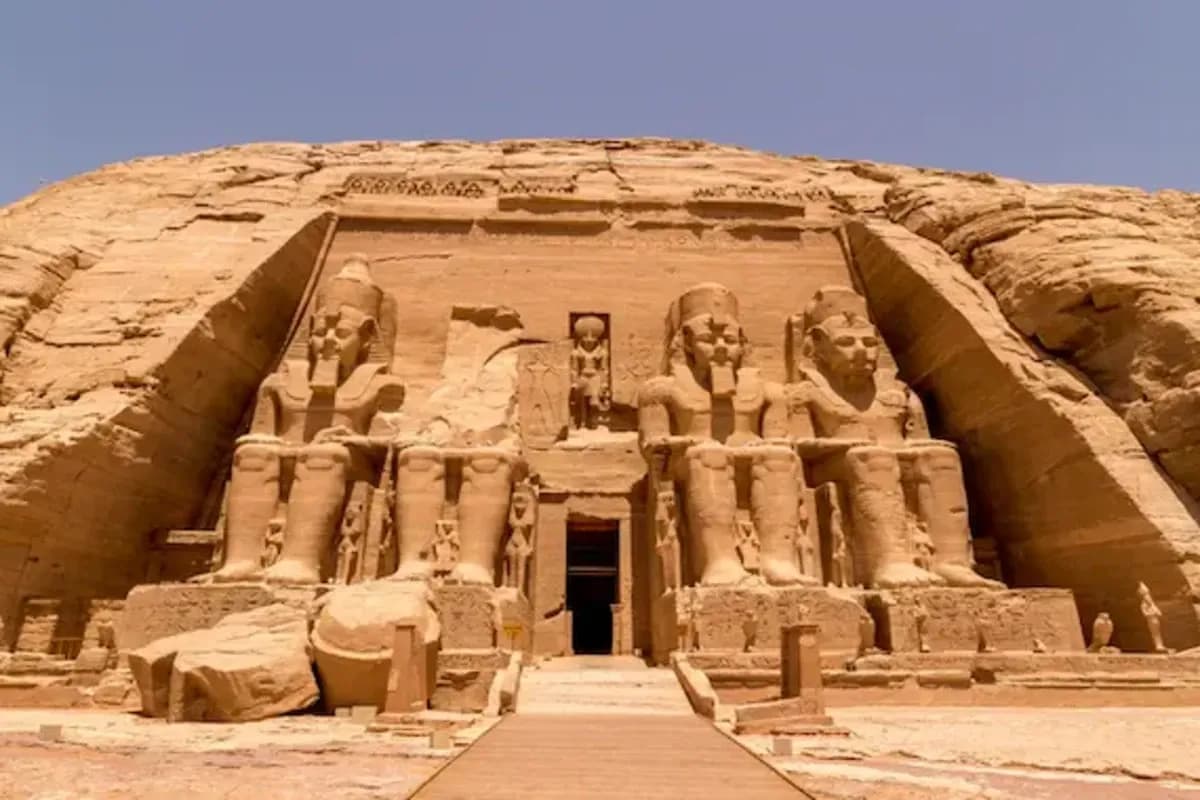
<h2>When the Sun Reaches Ramses II</h2><p>Twice a year, at sunrise on 22 February and 22 October, a beam of light travels the full length of the Great Temple of Ramses II at Abu Simbel and reaches the sanctuary carved deep into the rock. For a few minutes it lights up three of the four statues seated inside: Ramses II himself, the sun god Ra-Horakhty, and Amun. The fourth figure, Ptah, a god linked to the underworld, stays in shadow by design. Whether the two dates mark Ramses II's birthday and coronation, as is often claimed, is still debated among historians, but the alignment itself is not in question: it was built into the temple on purpose, more than 3,000 years ago.</p><h2>A Temple Built to Announce a Pharaoh</h2><p>Ramses II commissioned the Great Temple during Egypt's 19th Dynasty, and its scale makes the point plainly: four seated statues of the king, each about 20 meters tall, dominate the rock-cut facade. Inside, reliefs show him in battle and in the company of the gods, the same message repeated in stone. Abu Simbel also sat at the edge of Nubia, so the temple doubled as a statement of Egyptian power that far south.</p><p>A short walk from the Great Temple is a second, smaller temple dedicated to Nefertari, one of Ramses II's principal wives, and the goddess Hathor. Its facade carries statues of both the king and queen, and the reliefs inside, showing Nefertari alongside Hathor, are some of the best preserved from the period. Most visitors come for the solar alignment and skip this second temple; it's worth the extra few minutes, since it rounds out the site rather than just repeating it.</p><h2>How Abu Simbel Nearly Disappeared</h2><p>The temples standing today aren't in their original spot. When the Aswan High Dam was built in the 1960s, the rising waters of what became Lake Nasser threatened to submerge Abu Simbel along with dozens of other Nubian monuments. Egypt and UNESCO ran a joint rescue campaign between 1960 and 1980 that cut both temples into more than a thousand blocks and reassembled them on higher ground, about 65 meters above and 200 meters back from the original site. Engineers had to preserve the solar alignment in the process, recalculating the new orientation so the sunrise would still reach the sanctuary on the same two dates. It did, and still does.</p><h2>Planning Around the Alignment</h2><p>If you're building a trip specifically around the festival, treat the astronomical event and the public celebration around it as two separate things. The sunrise alignment itself is fixed and predictable; the surrounding program, performances, and access arrangements can change from year to year, so it's worth confirming details for your travel dates rather than assuming last year's setup. Visitors arrive well before sunrise and wait in the still-dark temple courtyard as the light gradually reaches the sanctuary, a slower and quieter experience than the two minutes of actual illumination might suggest.</p><p>Abu Simbel isn't only worth seeing on these two dates. Visiting outside the festival means smaller crowds and a more flexible schedule, without losing anything of the temple itself, since the statues and reliefs are there year-round. The festival adds a specific, once-or-twice-a-year event on top of a site that's already one of Egypt's most striking.</p><h2>Getting There</h2><p>Abu Simbel sits in the far south of Egypt, near Lake Nasser and the Sudanese border, and most travelers reach it as a day trip from Aswan, by road or by air. It also fits naturally onto the end of a Nile cruise between Luxor and Aswan: after the temples of Thebes and the sail south through the Nile Valley, Abu Simbel becomes the last stop rather than a separate side trip. <a href="/en/egypt/nile-cruises">Gentoura's Nile cruise itineraries</a> can be timed to line up with the festival dates for travelers who want both.</p><p>Since Abu Simbel is usually reached through Aswan, it's worth giving Aswan itself more than a layover. Philae Temple, the Unfinished Obelisk, the Nile Corniche, a Nubian village visit, and a felucca sail are all within easy reach, and travelers with more time can fold Cairo and Luxor into the same trip through <a href="/en/egypt/travel-packages/culture-classic">Gentoura's Egypt culture and classic travel packages</a>.</p><p>Weather-wise, the cooler months from October to April suit southern Egypt best regardless of the festival dates. For travelers specifically chasing the alignment, February and October decide the calendar either way, so book accommodation and transport for those weeks well ahead, since demand is highest right around them.</p>
#Abu Simbel Sun Festival#Abu Simbel solar alignment#Ramses II temple#Abu Simbel dates
Share article: